The Mughal Empire was one of the most influential empires in Indian history. Known for its grand architecture, vibrant culture, and powerful rulers, it shaped South Asia for centuries. From the magnificent Taj Mahal to the bustling trade routes, the Mughal Empire left a lasting mark. In this guide, we will explore everything about the Mughal Empire—from its location and capital to religion, economy, and art.
What is the Mughal Empire?
The Mughal Empire definition refers to a Muslim empire that ruled large parts of the Indian subcontinent from the early 16th century to the mid-19th century. Founded by Babur, it became famous for its centralized government, military prowess, and cultural achievements. The empire combined Persian, Indian, and Islamic traditions, influencing art, architecture, and daily life.
Where Was the Mughal Empire Located?
Many people ask, “Where was the Mughal Empire located?” It primarily covered modern-day India, Pakistan, Bangladesh, and parts of Afghanistan. The empire expanded gradually through wars and diplomacy, forming one of the largest empires in history. If you look at a Mughal Empire map, you’ll see how far its influence reached, touching major trade routes and connecting distant regions.
Mughal Emperors Biography Table
Mughal Emperors Biography
Emperor
Reign
Major Achievements
Religion
Notes
Babur
1526–1530
Founded the empire, won Panipat
Muslim
Central Asian origin
Humayun
1530–1556
Expanded territories, brief exile
Muslim
Struggled with Sher Shah
Akbar
1556–1605
Religious tolerance, cultural golden age
Muslim
Established Fatehpur Sikri
Jahangir
1605–1627
Art patronage, strengthened administration
Muslim
Famous for Mughal paintings
Shah Jahan
1628–1658
Built Taj Mahal, Red Fort
Muslim
Mughal Empire Capitals and One-Time Capitals
The Mughal Empire capital shifted over time. Initially, Babur ruled from Agra, and later emperors, including Akbar, expanded the empire with capitals at Fatehpur Sikri and Delhi. The onetime capital of the Mughal Empire, Fatehpur Sikri, was a marvel of architecture and planning. These capitals were centers of administration, trade, and culture.
Mughal Empire Religion and Society
Religion played a central role in the Mughal Empire. Most emperors, like Babur and Akbar, were Muslim, but Akbar promoted religious tolerance and dialogue with Hindus, Christians, and Jains. The empire’s religion shaped governance, festivals, and everyday life. People from multiple faiths lived together, creating a unique blend of Mughal Empire culture.
Akbar and the Mughal Empire Expansion
Akbar Mughal Empire rule (1556–1605) marked a golden age. He was known for military conquests, expanding the empire, and administrative reforms. Akbar established a fair tax system and promoted art and culture. Under him, the empire expanded to cover almost all of northern and central India, making it more powerful and prosperous.
Mughal Empire Art, Architecture, and Culture
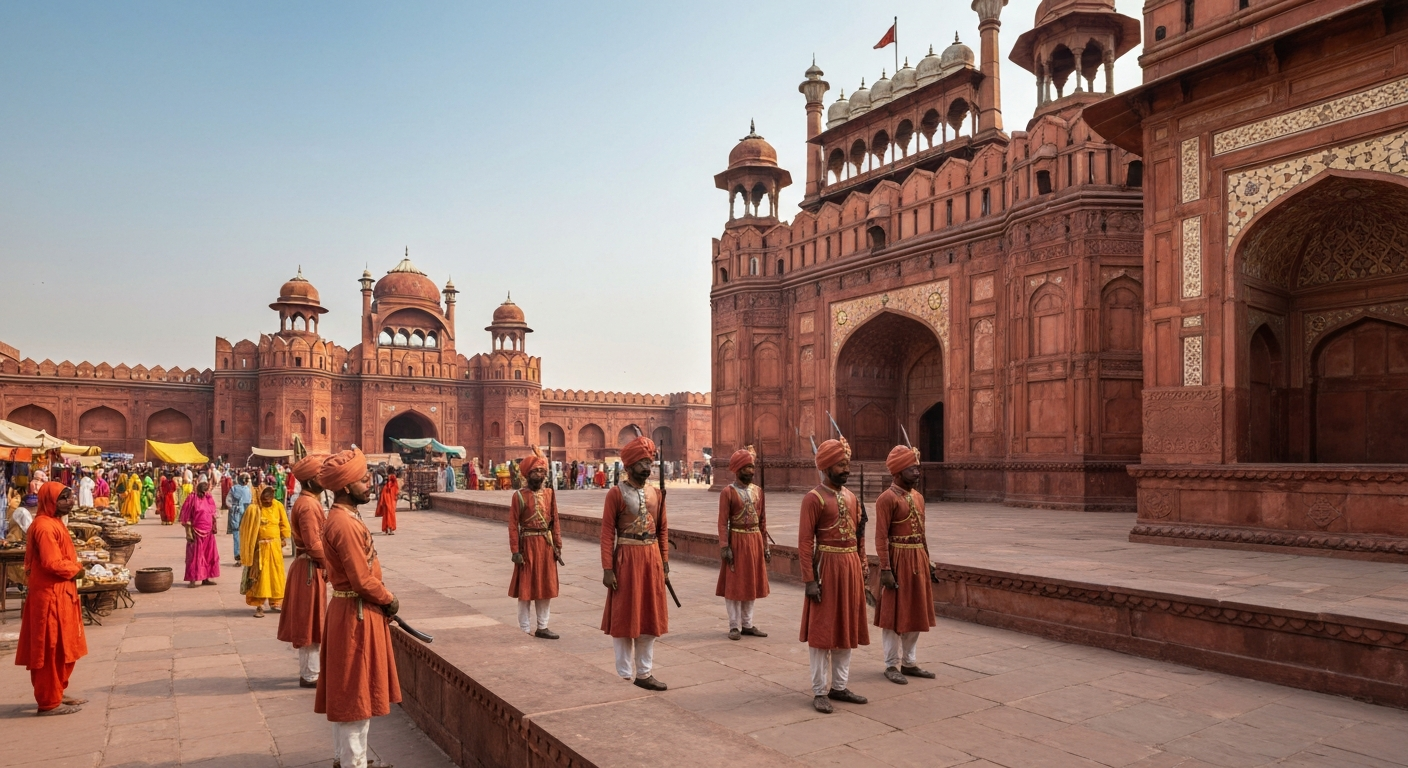
The Mughal Empire art was famous for its intricate paintings, jewelry, and textiles. Architecture, like the Taj Mahal and Red Fort, symbolized power and beauty. The empire’s culture included poetry, music, dance, and elaborate court ceremonies. The Mughal Empire architecture style combined Persian, Islamic, and Indian elements, influencing generations of buildings across South Asia.
Mughal Empire Economy and Trade Routes
The Mughal Empire economy thrived due to agriculture, trade, and craftsmanship. Major trade routes connected India with Persia, the Ottoman Empire, and Southeast Asia. Spices, textiles, and precious metals fueled wealth. Cities like Agra and Lahore became commercial hubs. Understanding these Mughal Empire trade routes shows how global connections strengthened its economy.
Mughal Empire Flag and Symbols
The Mughal Empire flag was a symbol of unity and power. Often featuring Islamic calligraphy and vibrant colors, it represented the emperor’s authority. Flags were important during battles, ceremonies, and diplomacy. These symbols helped reinforce the empire’s identity across diverse regions.
Key Dates and Timeline of the Mughal Empire
The Mughal Empire dates span from 1526 to 1857. Key milestones include:
1526: Babur founded the empire.
1556–1605: Akbar expanded the empire.
1658–1707: Aurangzeb ruled at the empire’s peak.
1857: British colonization ended the empire.
Knowing when the Mughal Empire started and ended helps understand its historical context.
Decline and Fall of the Mughal Empire
Several factors led to the fall of the Mughal Empire. Weak successors, invasions, internal conflicts, and economic decline contributed. By the mid-18th century, the empire had fragmented, and in 1857, the British officially ended it. People often ask, “Why did the Mughal Empire fall?” Poor leadership and changing political dynamics were key reasons.
FAQs About the Mughal Empire
1. What was the Mughal Empire? It was a Muslim dynasty that ruled most of India from 1526–1857.
2. Who founded the Mughal Empire? Babur, a descendant of Timur and Genghis Khan, founded it in 1526.
3. How long did the Mughal Empire last? It lasted about 331 years, from 1526 to 1857.
4. What religion was the Mughal Empire? The emperors were Muslim, but the empire promoted diverse cultural and religious practices.
5. How did the Mughal Empire fall? Weak leadership, economic decline, and invasions by foreign powers led to its fall.
6. Where was the Mughal Empire located? It was mainly in India, Pakistan, Bangladesh, and parts of Afghanistan.
Conclusion
The Mughal Empire remains a fascinating part of world history. Its art, architecture, trade, and culture continue to inspire. From Akbar’s vision of tolerance to the grandeur of the Taj Mahal, the Mughal legacy is undeniable. Exploring its map, trade routes, and emperors gives insight into how a powerful empire shaped South Asia. Dive deeper into its history and let the stories of its rulers and culture come alive!
 Babur
Babur